Here Is What THEY Say About It:
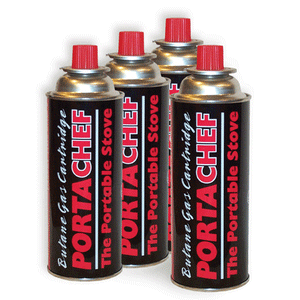
Butane, while not as easy to find in many places, is nonetheless a popular fuel for lighters, torches, and some camping stoves. Aerosols may also use the gas as
a propellant. Although butane is generally less expensive than propane, it can be also be more difficult to use; because it is not as common, many devices are not
designed to work with butane tanks.
Pure Butane gas has a boiling point right around 32°F so it does not work well at temperatures below freezing (not much if any proble for us desert dwellers).
Below its boiling point, butane stays a liquid, resulting in no pressure change to force it out of its container rendering it ineffective.
One of the advantages of butane is better fuel efficiency. If similar volumes of both propane & butane are burned at temperatures above freezing (32°F), butane
will provide about 12% more energy. This makes butane a good choice for those wanting to pack light, such as backpackers or campers. As long as you have access
to sufficient butane for your needs, the energy efficiency and price advantage can make butane a better deal in most cases.
Propane and butane are often combined in mixed fuels, which provide some of the advantages of each. Such mixes are popular for camping stoves in particular.
Because propane has a lower boiling point, it can be used to force the butane out of the container, even at temperatures at or below freezing. Pure propane
needs a strong steel container to hold it under pressure; combining it with butane means that the pressure can be lower, and the container lighter, which
is important for campers and backpackers.
While propane and butane are both highly flamable, butane which is at a much lower pressure can be safer to transport and use.
Here Is What WE Say About It:
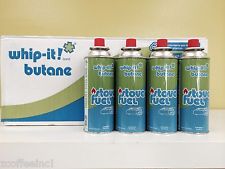
Butane comes in many brands, many different label design, different sized cans and even several different types of "connections" depending on your gear.
Before you buy you should be sure of what type of can/connector you need.
Personally, I have liked butane stoves since I tried out my first "full sized" single burner one. They are lighter and more compact than their propane
cousins and they heat everything faster, thats important in the morning when you have to make your breakfast and break camp to hit the trail again. For the past
two years, I've only camped using butane stoves.
There are two disadvantages I see with "pure" butane currently.
- Butane of any type is harder to find than propane here in the USA. When I was in Europe last summer there seemed to be as much or more butane
for sale than propane.
- "Pure" butane has a boiling point of 32°F which means at temperature less than freezing, it may or may not work at all, the same applies to very high
altitudes (I have used my butane stove at over 6,000 feet in the past without issues)
Fortunately, there is some help to both problems.
- Both types of typically used butane (1. "Pure Butane & 2. Butane-Propane Mixture) can be bought at most sporting goods stores and Walmart Stores.
- In ALL cases, you will need adaptors to use applicances designed for the tall "pure" butane cans for use with the shorter & wider propane-butane mixed product
and vice-versa
- Using cans of propane-butane mixed (shorter wider cans) along with an adaptor your butane stove can be used at temperatures below freezing and at
very high altitudes
- With the proper adaptor that includes a pressure regulator, you can use bottled propane with your butane appliance in a "pinch"
I have found that currently Butane is a bit on the expensive side. Why, who knows, it's triple what it was just a few years ago but you can still buy it for between
$1.50 and $2.00 a can if you plan ahead and buy in bulk. You can find Whip-It butane by the case of 12 or 28 on Ebay for under $2.00 a can including shipping
if you make a reasonable offer just under $1.75 a can they will usually accept it. I'm going to use more than 12 cans a year so I buy a case of 24 at a time.
My last order was $1.61 a can shipped! Compare that to $3 to $4 elsewhere.
Bottom line, I love butane. I currently have 3 butane stoves, a butane tent heater and two butane lanterns. In addition, I have all the adaptors one would need
to mix and match types of butane/connectors to different appliances and one to connect 1lb propane bottles in an unlikely emergency. It doesn't cost much to try it out,
for around $30 on Ebay you can get a stove along with a few cans of butane. I use it and I recommend it.
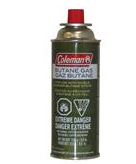
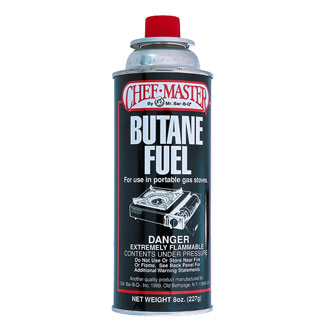
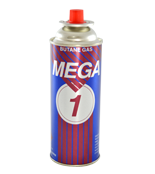
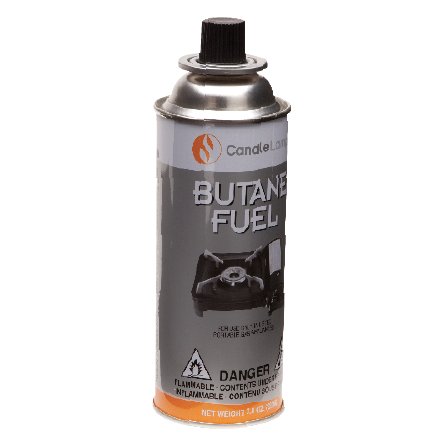
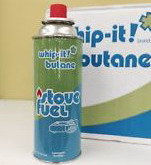
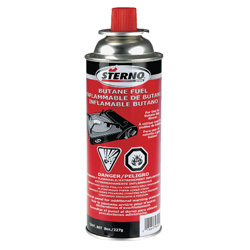
Below are some of the more popular and available brands of "pure" butane here in the USA. This is used for all "full sized" single burner stoves
and most butane tent heaters. Take note of the can shape, size and the small protective cap. This is what to look for.
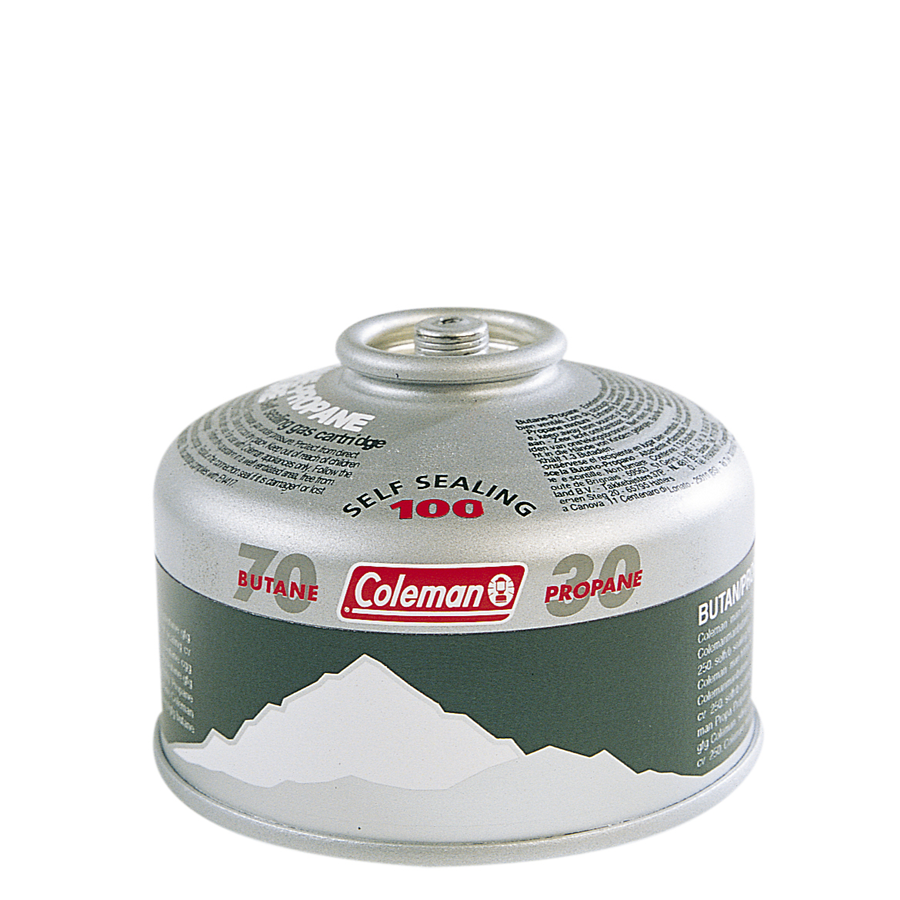
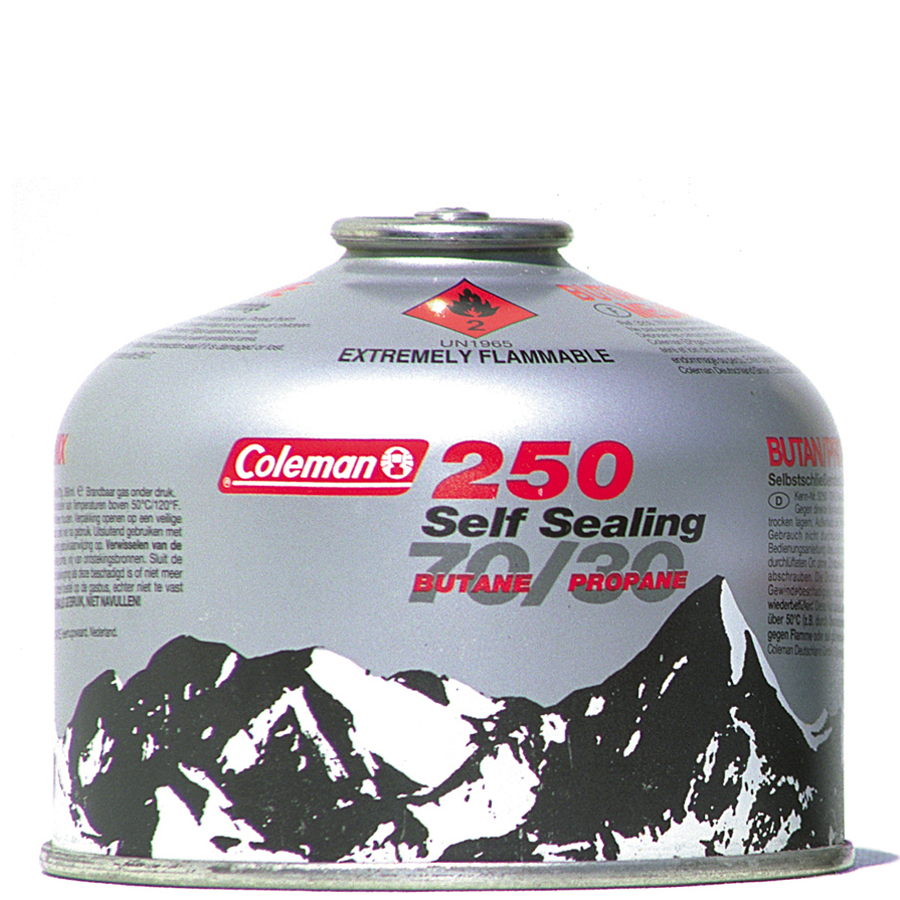
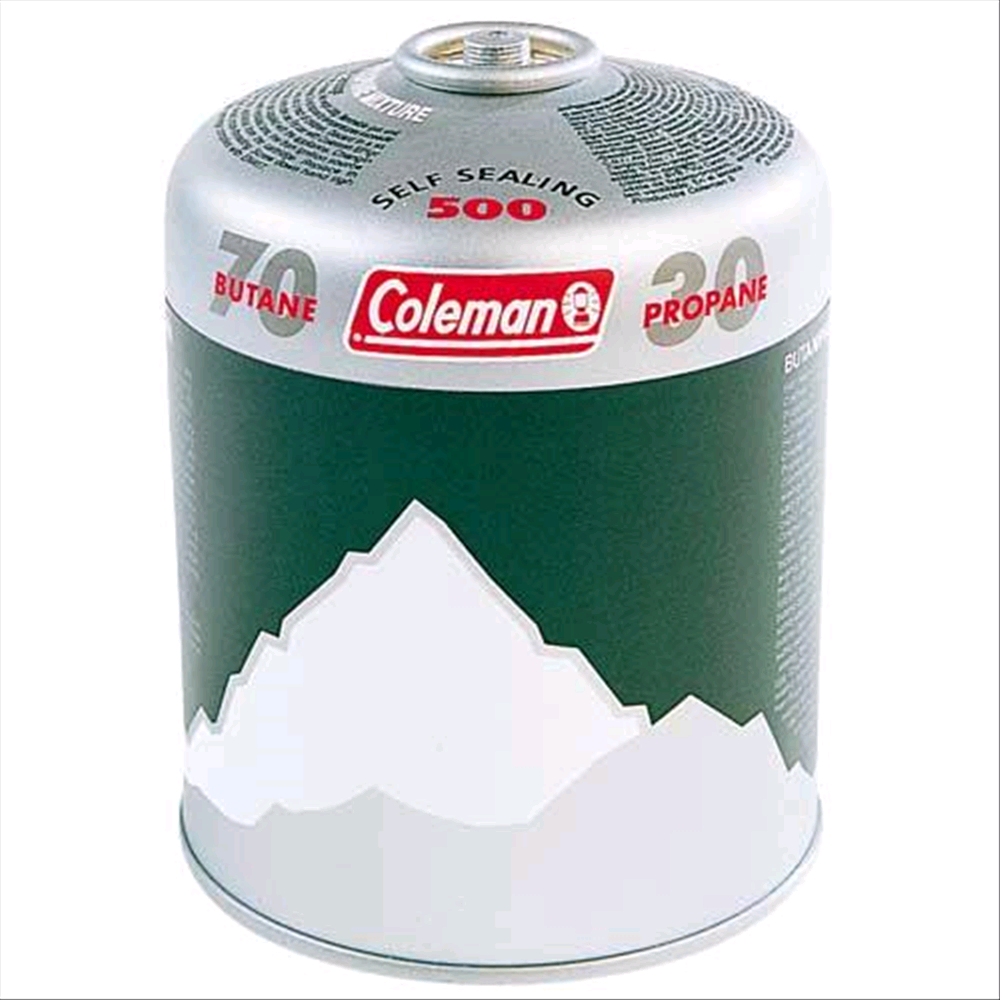
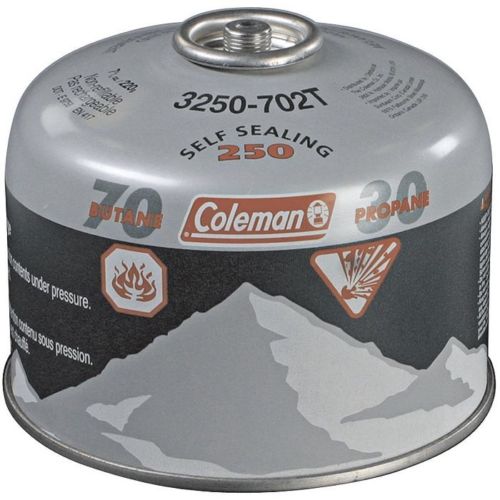
Below are the typical propance-butane mix cans. These cans are usually marked 70/30 and come in 100, 250 and 500 sizes. The 250 size is the most common one you
will find at Walmart or your local sporting goods store. Note the size and shape and the diffence connection for the appliance. These will fit most micro stoves
(I own one and it is great for backpackers but I don't recommend it for your typical Jeep camping)and most micro lanterns.
While you do NOT need any of the adaptors below, they can be convenient. Some of them are expensive and some are reasonbly priced. I'm just showing these to you
for informational purposes. You can search for these on Amazon.com or Ebay.
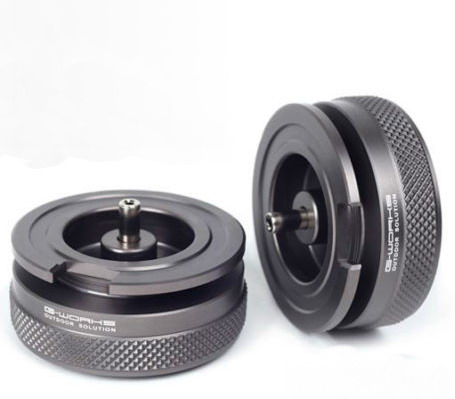
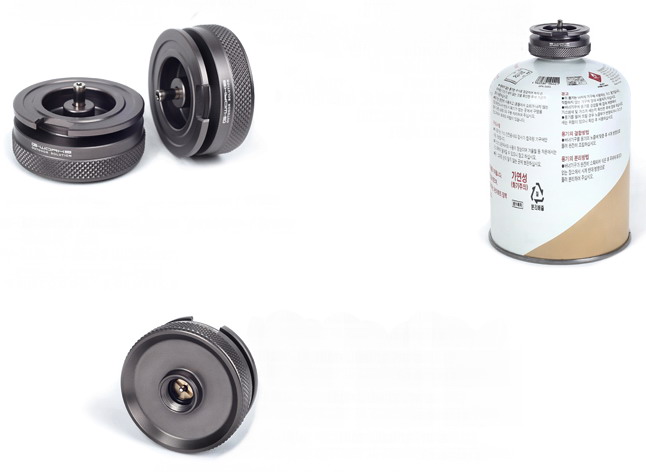
These adaptors will connect "pure" butane (the taller, skinny bottles) to micro stoves and lanterns designed for the 70/30 butane-propane mixed cans.
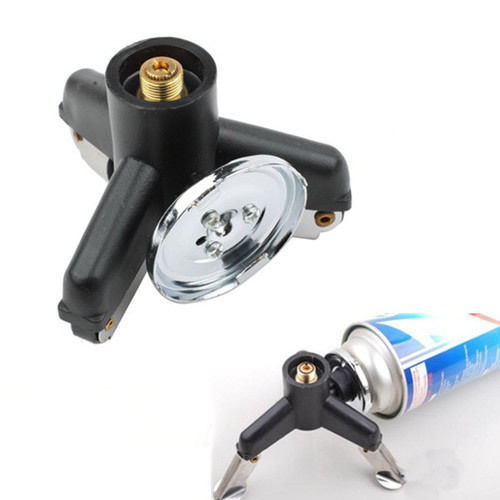
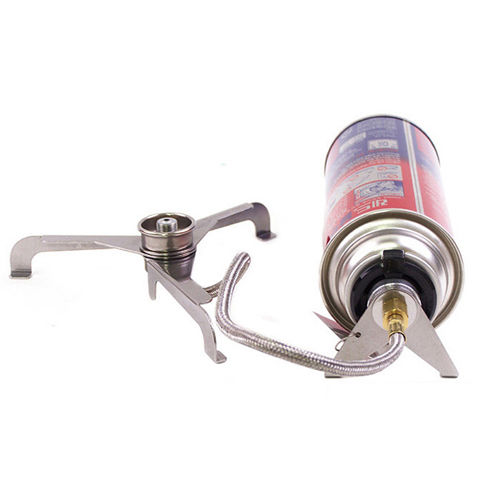
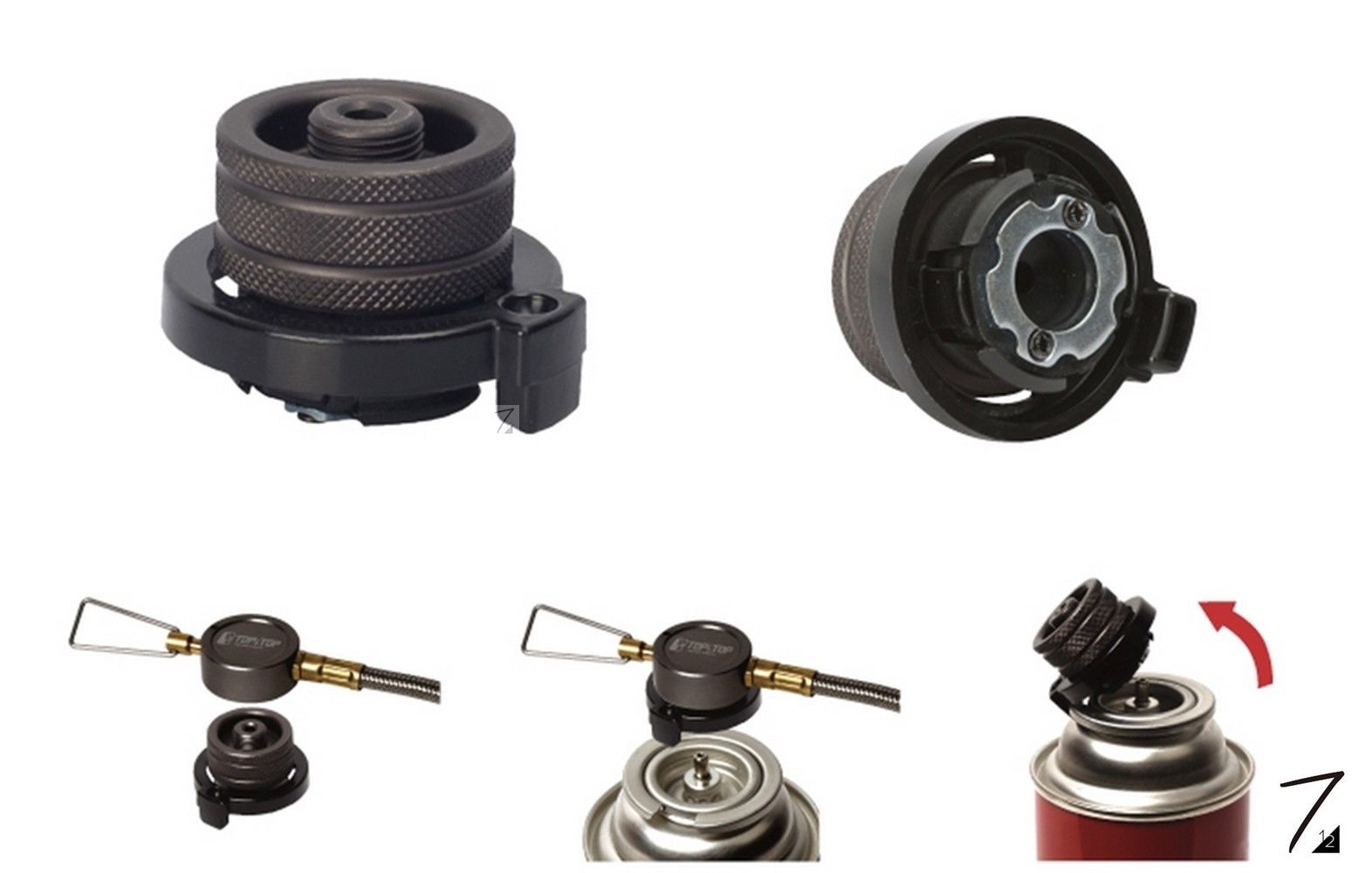
Here are some adaptors to connect the heavy 1 lb pure propane bottles to micro stoves and lanterns designed for the 70/30 butane-propane mixed cans.

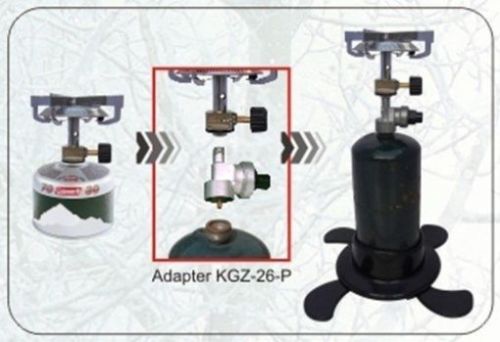
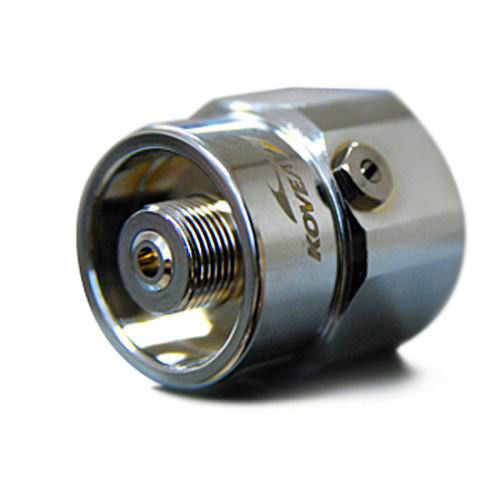
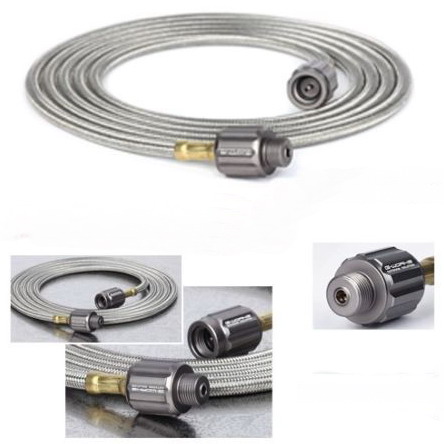
And finally, the adaptor to connect the 70/30 butane-propane bottles (or to a 1 lb propane bottle with an adaptor from above) to the full size butane single burner stoves
and tent heaters. It requires an extension hose as shown.
shown.
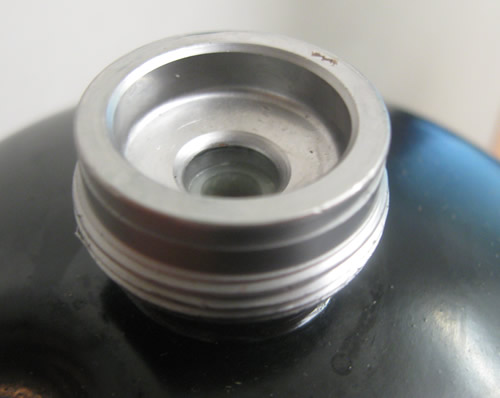
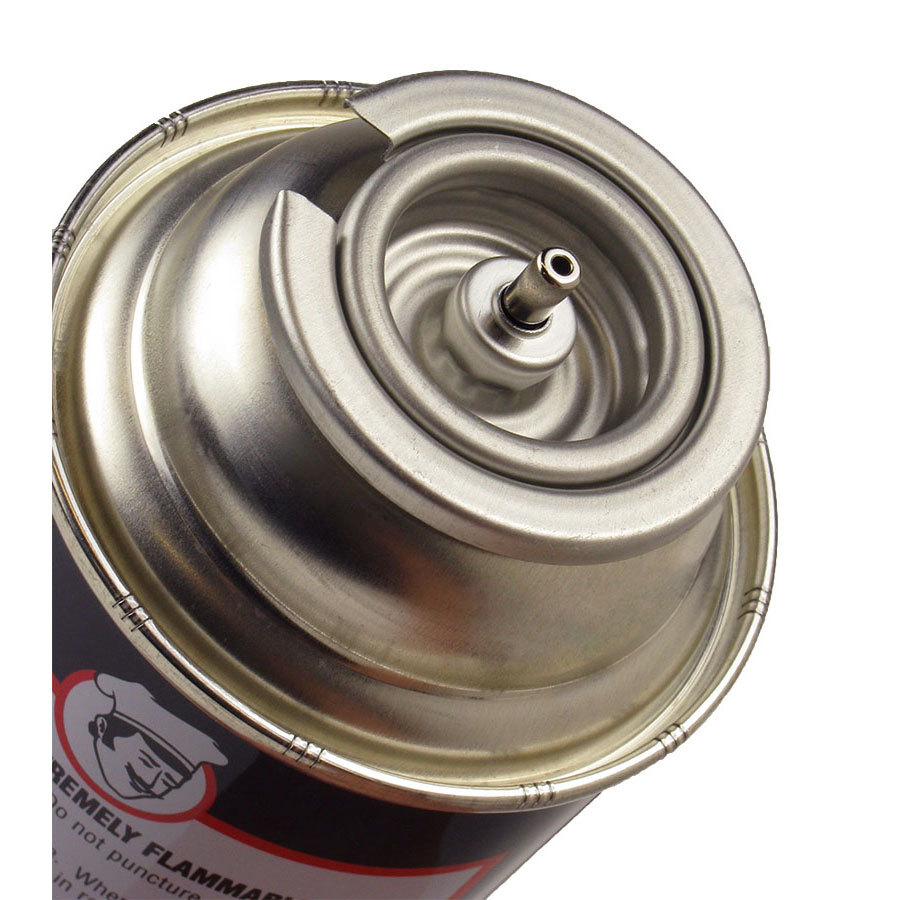
These three pictures show the difference in how Propane, Butane and 70/30 Butane-Propane mix attachment points look like and differ. The first picture shows your
typical 1 lb propane bottle with the threaded top, the second shows the tall Butane cans and note how there is a notch in the rim (the notched can rim is the ONLY
butane that will work with butane camping gear). The third is the 70/30 canister showing the threaded nipple on the top.
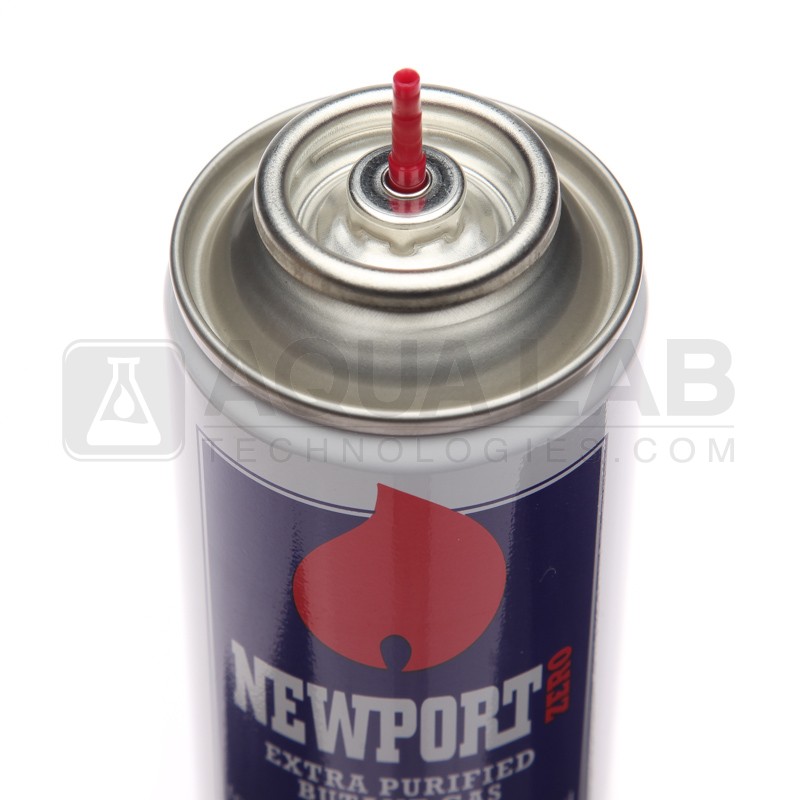
A few final pictures to better explain or confuse you. The first one shows the butane bottle that is used for filling lighters and such. NOTE that the rim
does not have a notch and there is a long nozzle coming out of the center, not always red as in the picture. Also this can is usually skinny and shorter and the
protective plastic cap is as big around as the can itself (the butane you need has a protective plastic cap that covers only the center part inside the rim. this
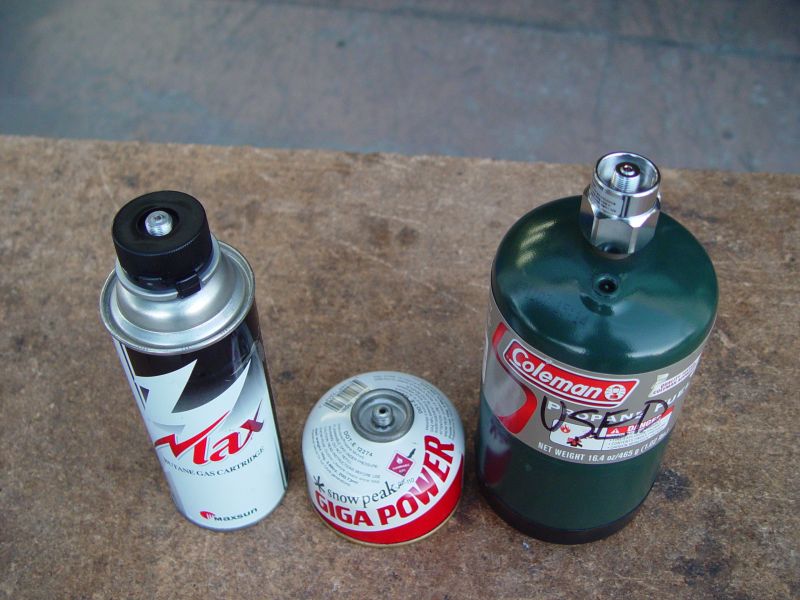
This canister shown in picture one will not work on any of your butane camping gear so do NOT buy. The second picture shows Butane can with an adaptor for 70/30
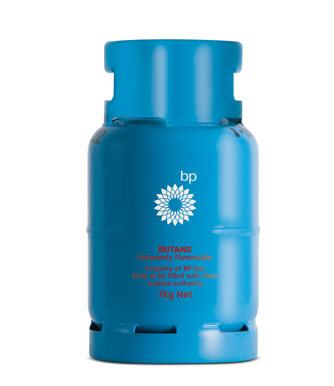
appliances, a 70/30 can and a propane bottle with a 70/30 adaptor. The third picture shows the large butane bottles available in Europe and much of the rest of
the world. We saw these everywhere in France, especially at the larger self serve gas stations where they were plentiful.
----------------------------------------------------------------------------------------------------------------------------------------